Parents often assume tutoring is just smaller-scale classroom teaching. It isn't.
The skills overlap, but the work is fundamentally different. A good classroom teacher doesn't automatically become a good tutor, and plenty of subject experts struggle to make tutoring stick. What makes the difference is understanding how tutoring works as its own discipline, and that's where experienced educators have a clear advantage.
What's different about tutoring?
In a classroom, a teacher manages thirty individuals as a group. Lessons are planned to a scheme of work, paced to cover curriculum content, and delivered to meet the needs of the majority whilst differentiating where possible.
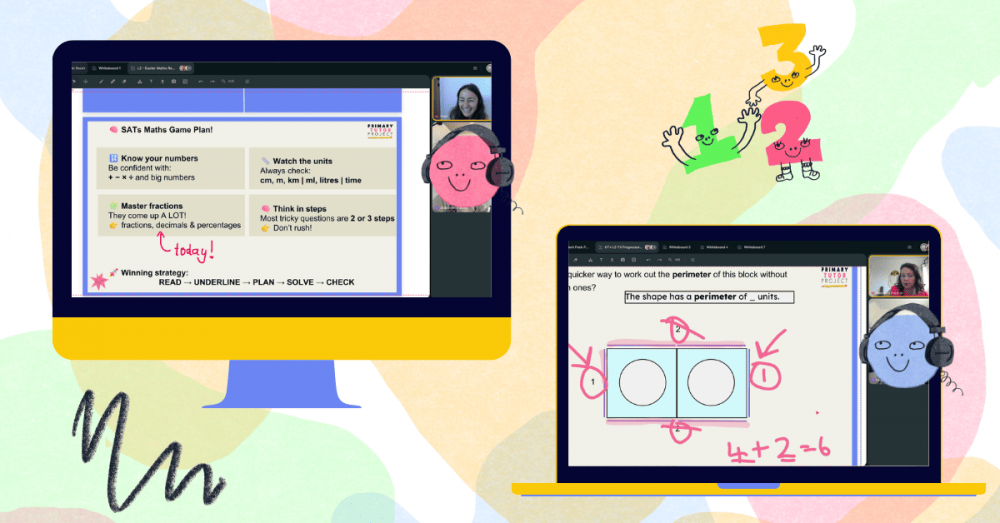
Tutoring inverts that model. You're working with one child, or a small group of three to five. There's no crowd to manage, no behaviour policies to enforce, and no pressure to move on before understanding is secure. But that freedom creates its own challenge: you need to diagnose exactly where a child is stuck, adapt your approach in real time, and make every minute count.
This requires a different kind of pedagogical skill. You're not delivering a lesson plan. You're responding to what's happening in front of you, moment by moment.
Why subject knowledge alone isn't enough
Someone with a maths degree might know calculus inside out, but struggle to explain why we invert and multiply when dividing fractions. A native English speaker might write beautifully but find it hard to break down how fronted adverbials actually work.
Experienced teachers bring something else: they've already spent years watching children get stuck on the same concepts in the same ways. They know which metaphors land, which examples clarify, and which explanations confuse. They've taught the same content dozens of times and refined their approach based on what actually works in practice, not theory.
That pattern recognition is what makes tutoring effective. You spot the gap faster, adjust quicker, and waste less time on approaches that won't help this particular child.
The advantage of classroom experience
Teachers who've worked in primary schools understand how reading, writing, and maths are actually taught in UK classrooms. They know the progression from Reception through Year 6. They recognise the terminology children use. They understand what "working at expected standard" means in practice.
This matters because tutoring works best when it reinforces and extends what's happening at school, not when it runs parallel to it. A tutor who understands the curriculum can connect their sessions to what the child is learning in class, building on foundations rather than accidentally contradicting them.
There's also the question of pace. Experienced teachers know when to push and when to consolidate. They can read a child's body language, notice when concentration is slipping, and adjust the session accordingly. That comes from years of managing learning in real classrooms, not from knowing the content.
What makes tutoring stick
The most effective tutors don't just explain concepts. They teach children how to think through problems independently.
That means asking the right questions rather than giving answers. It means building metacognitive skills so children can monitor their own understanding. It means creating small wins that build confidence, because a child who believes they can improve is more likely to engage with difficult material.
None of this is mysterious, but it does require skill. And that skill develops faster when you've already spent years teaching children at different stages, with different needs, in different contexts. You've seen what works. You know what doesn't. You can adapt.
Small group vs 1:1: both need teaching skill
Some parents assume 1:1 tutoring is always better than small groups. It isn't necessarily.
Small groups of three to five children create a dynamic where children learn from each other's questions, hear different explanations, and build confidence in a supportive peer setting. But running an effective small group requires strong classroom management skills and the ability to keep multiple children engaged simultaneously.
One-to-one tutoring allows for completely personalised support, but it also requires the tutor to maintain energy and rapport without the natural momentum a group creates. Both models work. Both require experienced educators who know how to structure sessions, track progress, and keep children motivated.
What to look for in a tutor
When you're choosing a tutor, subject knowledge is important but it's not the only thing that matters. Ask about their teaching experience. Have they worked in schools? Do they understand the UK primary curriculum? Can they explain how they assess a child's starting point and track progress over time?
Qualified teachers bring structure, pedagogy, and proven classroom strategies. They know how to break down complex ideas, build understanding step by step, and adapt their approach based on how a child responds. That's what makes tutoring effective, not just knowledgeable.
The bottom line
Tutoring isn't classroom teaching at a smaller scale. It's a different kind of work that requires its own skill set. But experienced educators have a head start, because they've already spent years developing the exact skills that make tutoring work: diagnosing gaps, adapting explanations, building confidence, and making learning stick.
If you're looking for tutors who combine subject expertise with proven teaching experience, Primary Tutor Project works exclusively with qualified UK teachers. We deliver targeted tuition in English and maths for primary school children, helping them build understanding and confidence through structured, evidence-based support.
Author: Callie Moir
I’m Callie, the founder of Primary Tutor Project, an online tuition service that connects families around the world with expert UK primary school teachers. We specialise in English and maths tuition (including ESL), supporting children through every stage of primary education. I've been a tutor and an early years and primary school teacher in Colombia, Japan, and the UK, and I love sharing my experience through the Primary Tutor Project blog!
Loading...
The website uses cookies to provide the best user experience while browsing safely. You can read more about cookies in the Privacy Policy. Cookies Policy