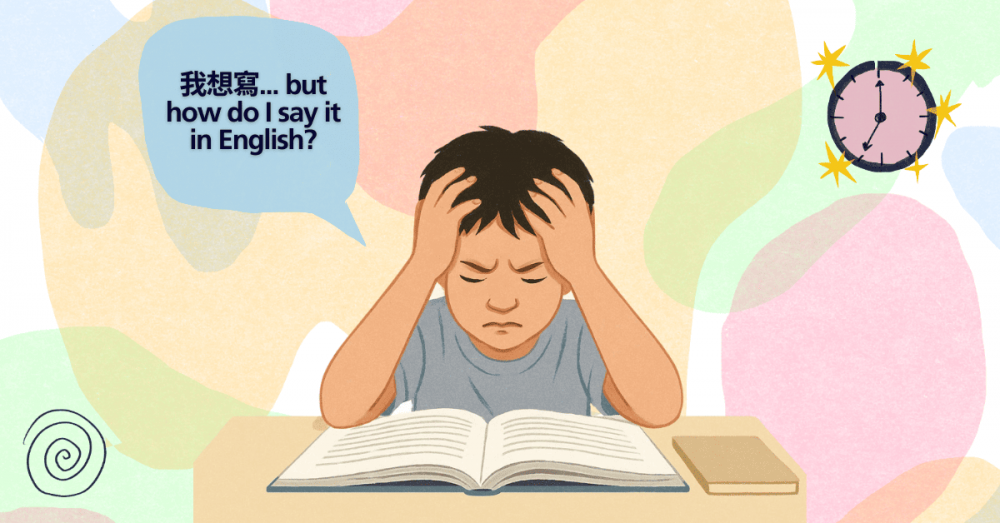
They can read the words. But when you ask them what the paragraph means, they stare blankly. They struggle to write more than two simple sentences. When classmates chat in English, your child stays quiet.
You wonder: is this normal? Or does my child need help?
Here are five clear signs your child in a Hong Kong local school needs English tutoring support.
Sign 1: They Read Words But Miss the Meaning
Your child can decode words on a page. They pronounce them correctly. But when you ask "What did you just read?" they shrug.
Reading comprehension requires more than pronouncing words. Children need to understand context, infer meaning, recognise idioms, and grasp the author's intent.
Many local schools in Hong Kong teach primarily in Cantonese, with English as a subject. Children learning English as a second language often struggle with the gap between word recognition and genuine comprehension.
If your child reads aloud well but summarises poorly, this signals a comprehension problem that tutoring addresses directly.
Sign 2: They Think in Cantonese, Translate to English
Watch your child write English sentences. Do they pause for long periods? Do their sentences sound awkward?
They're translating in their heads. They think in Cantonese, then convert it word-for-word into English.
English has different grammar patterns than Cantonese. "I yesterday went shopping" makes sense as a direct translation, but native speakers say "I went shopping yesterday."
Children who translate need structured support to build English language patterns.
Sign 3: Homework Takes Twice as Long as It Should
Your P4 child sits with an English worksheet. Twenty questions. Classmates finish in 30 minutes. Your child takes 90 minutes.
Not because they lack intelligence. Because they're processing in two languages.
Every question requires decoding English, understanding what's being asked, finding the answer, and formulating a response. Each step takes longer when English isn't your strongest language.
If homework consistently takes much longer than expected, language fluency is the bottleneck.
Sign 4: They Avoid Speaking English Outside Class
In English class, your child answers when called on. Outside class? Silent.
They won't speak English to relatives. They don't volunteer during English activities. When you speak English at home, they respond in Cantonese.
This signals low confidence. They worry about sounding "wrong."
Confident English speakers look for chances to practise. Children who avoid English need a safe environment to build skills without judgement.
Sign 5: School Reports Mention "Could Participate More"
Teachers use careful language in reports. "Could participate more in English discussions" means your child stays quiet. "Needs to build confidence with written expression" means they write minimally to avoid mistakes.
According to education research on Hong Kong, tutoring has become integral to education culture, with students seeking additional academic support outside the classroom.
If reports consistently mention participation or confidence in English, your child would benefit from tutoring.
What UK Teachers Provide
UK-qualified teachers specialise in teaching English as a language system. They know how to teach children who are learning English as an additional language. They build skills systematically.
Parents notice improvements within weeks. Children read with better understanding. Writing becomes less painful. Speaking confidence builds. Homework time decreases as fluency improves.
Getting Started
If you recognised two or more signs in your child, structured English tutoring will help.
Your child's struggles aren't about intelligence or effort. They're about language exposure and explicit instruction. With the right support, every child can build the English fluency they need to succeed in school and beyond.
Author: Callie Moir
I’m Callie, the founder of Primary Tutor Project, an online tuition service that connects families around the world with expert UK primary school teachers. We specialise in English and maths tuition (including ESL), supporting children through every stage of primary education. I've been a tutor and an early years and primary school teacher in Colombia, Japan, and the UK, and I love sharing my experience through the Primary Tutor Project blog!
Loading...
The website uses cookies to provide the best user experience while browsing safely. You can read more about cookies in the Privacy Policy. Cookies Policy