Your child brings home a reading book. The words are simple: "The cat sat on the mat." But your child looks at "cat" and says "car." They see "sat" and guess "sit."
You're confused. Why can't they just sound it out?
The answer is phonics. If that word makes you feel lost, you're not alone. Let's break down what phonics is, why it matters, why English tutors and teachers teach with phonics, and how you can help at home.
What Exactly Are Phonics?
Phonics is the method of teaching children to read by linking sounds to letters.
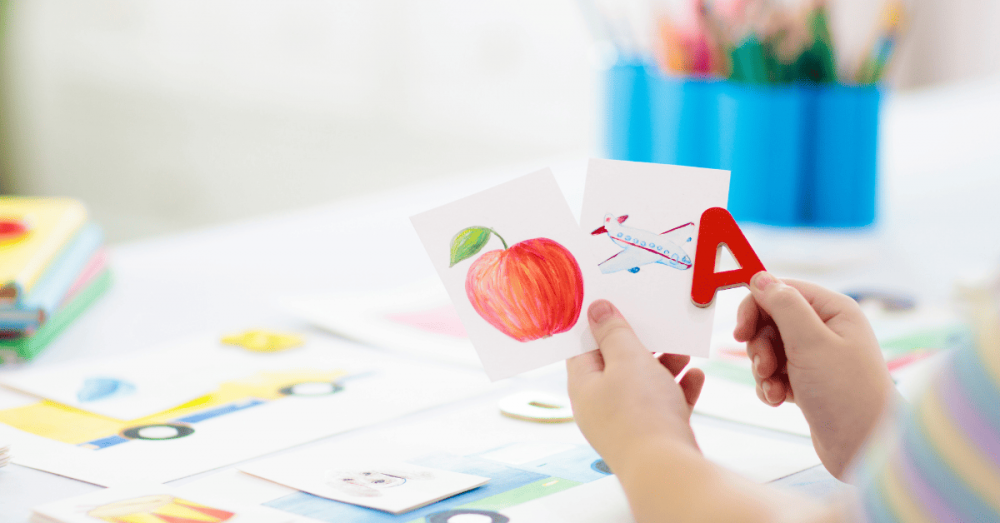
Instead of memorising whole words, phonics teaches that letters represent sounds. When you put those sounds together, they make words.
Take "dog." Children learn: "d" makes "duh," "o" makes "oh," "g" makes "guh." Put them together: d-o-g = dog.
This is called decoding. It's the fundamental skill that turns non-readers into readers.
Why Schools Use Phonics
Research shows systematic phonics teaching is the most effective way to teach reading. UK schools must teach phonics from Reception onwards.
English is largely phonetic. About 84% of English words can be sounded out using phonics rules. Once children master these patterns, they can tackle unfamiliar words independently.
The 6 Phonics Phases
Phase 1 (Nursery, Age 3-4)
Children develop listening skills, learn to hear different sounds, and practice rhyming. No letters yet, just sound awareness.
Phase 2 (Reception, Age 4-5)
Children learn 19 letters and their sounds in sets: s, a, t, p, then i, n, m, d, and so on. They can read simple words like "cat," "dog," "pin."
Phase 3 (Reception, Age 4-5)
Digraphs (two letters, one sound like "sh") and long vowels ("ai," "ee," "igh"). Now they read "shop," "train," "moon."
Phase 4 (Reception/Year 1, Age 5-6)
No new sounds. Children practice words with adjacent consonants like "stop," "frog," "train." Fluency builds.
Phase 5 (Year 1, Age 5-6)
Alternative spellings and pronunciations. "ai," "ay," and "a-e" all make the same sound. Reading becomes smoother.
Phase 6 (Year 2+, Age 6-7)
Focus shifts to spelling, prefixes, suffixes, and reading fluently without sounding everything out.
Signs Your Child Has Phonics Gaps
They guess based on first letters or pictures, not sounding out.
They can't blend. They say "c-a-t" but can't merge it into "cat."
Simple words aren't automatic. "The," "and," "said" should be instant by Year 1.
New words are impossible. Without phonics, unfamiliar words can't be tackled.
If your child shows these signs, they need targeted support. Our English Tuition Clubs provide systematic phonics teaching in small groups with UK qualified teachers.
How to Practice Phonics at Home
Say sounds, not letter names. Say "buh" not "bee," "sss" not "ess."
Practice blending daily. Say three sounds slowly (c-a-t) and ask your child to blend them. Start simple.
Play sound games. "What sound does 'sun' start with?" Make it playful.
Read decodable books. Books using only learned phonics patterns build confidence.
Keep it short. Ten focused minutes beats thirty frustrating ones.
Best Phonics Apps
Free:
Teach Your Monster to Read (excellent, game-based)
Phonics Play (games for all phases)
BBC Bitesize Phonics (UK curriculum-aligned)
Paid:
Reading Eggs (comprehensive, worth it)
Phonics Hero (systematic, follows schools)
Nessy Reading & Spelling (brilliant for struggling readers)
Use apps for 10-15 minutes daily alongside reading with you. They're reinforcement, not replacement for human interaction.
Common Mistakes Parents Make
Teaching letter names first. Names (ay, bee) confuse. Stick to sounds (ah, buh).
Adding unnecessary sounds. Say "mmm" not "muh."
Moving too fast. Master each sound before adding more.
Making it too serious. Phonics should feel like play.
Inconsistent practice. Five minutes daily beats an hour on Sunday.
When to Get Professional Help
Consider enrolling your child in group classes or 1:1s with a tutor if:
Your child is Year 1+ but can't blend simple sounds
Progress has stalled despite home practice
They're anxious or resistant about reading
School has mentioned concerns
Our English Tuition clubs provide systematic phonics teaching with UK qualified teachers. Groups of maximum 5 children ensure individual attention. Weekly sessions give a full term to build foundations.
The Truth About Phonics
Phonics isn't complicated. It's teaching that letters represent sounds and showing how to put sounds together to read words.
Most struggling readers have phonics gaps. Fill those gaps and reading becomes possible.
Your child doesn't need to memorise every word. They need to learn the code. Once they crack it, reading unlocks everything: information, stories, independence, confidence.
If your child is struggling, start with phonics. Get them solid on sounds and blending. Everything builds from there.
Author: Callie Moir
I’m Callie, the founder of Primary Tutor Project, an online tuition service that connects families around the world with expert UK primary school teachers. We specialise in English and maths tuition (including ESL), supporting children through every stage of primary education. I've been a tutor and an early years and primary school teacher in Colombia, Japan, and the UK, and I love sharing my experience through the Primary Tutor Project blog!
Loading...
The website uses cookies to provide the best user experience while browsing safely. You can read more about cookies in the Privacy Policy. Cookies Policy